Showing posts with label justice. Show all posts

Wednesday

Oy Vey: Remember When it wasn't Cool to be an Anti-Semite

Photo Credit: Unknown (Contact me)

I seriously like Jews.

I mean, I'll pass on the Manishewitz, but in general, wow, I love those people.  Yeshua, of course, is my favorite.  He did die for me after all and indwells me by his Spirit. But, he is in good company.

As a goy-boy growing up in rural Oklahoma I was not afforded many opportunities for, well, schmoozing with the Chosen People, but as my world gloriously expands God is giving me more and more encounters with Jews of many backgrounds.  I'm getting opportunities for cultural learning, friendship and partnership.  Yiddish words and phrases in sitcoms are starting to make sense and I'm secretly (not so secret now, I guess) hoping for an invite to a pakka Purim celebration (okay, "pakka" is Hindi lingo rather than Yiddish, but old habits die hard. Would the Yiddish be echt?)

But what is going on today? Is it just me or is the mood changing?  Though I grew up with very little global exposure, I somehow imbibed a rather undiluted message about the Jews -- i.e. antisemitism is evil.

So why does it suddenly seem more okay to be antisemitic?  Consider the following short video taken of a man simply walking the streets of Paris as a Jew:


Are you kidding me?

Of course this is just the tip of the iceberg with a seemingly growing number of terrorist threats and attacks directed towards Jews, consider:

The recent desecration of Jewish graves in France
The shooting at a synagogue in Denmark
The conspiracy and cover up regarding the massacre of Jews in Argentina

To mention just a few high-profile incidents.

It's enough to prompt Israel's PM, Benjamin Netanyahu to call for Jews to come "home" en masse to the Promised Land.  A fact that's sure to tempt a few of you to dust off some of your old Jenkins-Lahaye novels (you know exactly where they are, don't you?).

Of course, it get's even more meshuggah.  On the one hand, you have Hollywood legend Shirley MacLaine writing some really stupid stuff about karma and the holocaust.  Her speculation that the millions of Jews slaughtered by the Nazis may have had it coming to them due to bad deeds committed in a previous life was newsworthy for about five minutes.  But, hey, Vanilla Ice is trending on Twitter so ... at least our priorities are in order.

Swing the pendulum from the famous to the obscure and you find this bizarre story of a Iowa woman who  was apparently trying to convert a Jewish neighbor to Christianity through the old beat-them-till-they-convert method.

Oy gevalt!

And then there are my own evangelical tribesmen (and tribeswomen) who in their zeal to always be attacking everything that U.S. President Barak Obama says, rushed to defend the Crusades in response to the President's suggestion that they might have been kind of a bad thing.  The standard defense posted and re-posted especially in the Facebook-sphere went something like this:

"Silly Obama, don't you know that the Crusades were essentially defensive struggles against extremist Islamic powers bent on the conquest of Europe?  Gosh, you really are a Muslim aren't you?"

And before you go about comfortably dismissing me to some ideological camp that you've taught yourself to ignore, let me say that I begrudgingly voted for McCain and No One in the past two presidential elections, respectively.  Not that it's any of your business.

But look here.  Putting aside whatever defensive motives may or may not have been at play in the various Crusades (and to what extent those motives were shared by the actual Crusaders) for a moment, I must ask.  Have we really forgotten how many Jews were killed by Christians during the Crusades? I blogged a bit about this recently (Here is the link in case you missed it).  I don't understand how this isn't a no-brainer for my fellow Jesus-followers.  The Crusades resulted in the massacre of thousands of Jews.  They don't get to be defended.  Why isn't that the end of the story?

So, here I am, scratching my head. Praying. And wondering what good a little voice like mine can do in this context.  Should I start a #Jewishlivesmatter or #JesuisHebreu? But leveraging trendiness doesn't go very far.

Pondering.

For now, I feel that I want to say without qualification that I genuinely love and admire the Jews.  As a follower of Jesus, I know that they are a people greatly honored by the God I worship.  I owe my spiritual heritage to their stewardship of faith and the Scriptures.  As a student of people and culture, I am intrigued by the festivals, the language, the religion, the history, the music and pretty much all things Jewish.  As a human, I rejoice in our shared humanity and know that I'm richer in relationship to Jews and poorer when separated.

Those who know me well, will know how sincere I am when I say that I would love for more Jews to move into my neighborhood.  If the man in the video above came walking by my house -- or up to my door -- he would find a warm welcome.

Join me in praying for peace for the Jewish diaspora wherever they live in the world.

Monday

Defending the Crusades (Not really, they sucked)

I am grateful to a friend who pointed out this piece. I've held my tongue while the heat was high following the National Pontificating Breakfast. I have no interest in either defending or critiquing President Obama's comments - it never occurs to me to look to sanded down, poll-tested speeches for profound insight anyway. 

However, the subsequent rush to defend the Crusades by many of my fellow Christ-followers was downright embarrassing. At first, I thought it was a joke - something like the Onion. Surely no one would actually try to defend the Crusades.  But, the more I read and saw posted, the more I blushed.  It was true. Which meant that the hatred towards President Obama was felt so hotly by some that they would seek to actually defend one of the darkest moments in Church history. 

Now, I know that some have taken pains to point out the larger context surrounding Crusade history and the various pressures that gave rise to a war between European and Islamic powers. This is well and good. A passing reference to the Crusades as "bad" is certainly abbreviating matters. However, it isn't abbreviating matters incorrectly. Yes, there were genuine acts of piety and golden feats of heroism along with understandable and necessary military campaigns designed for legitimate defensive aims.  But, the Crusades featured so much evil and of such a wretched sort and so blatantly "in the name of Christ" that the only reasonable response of the modern day disciple of Jesus is to lament.  

I would respectfully urge those who have tried to defend the Crusades to read this very solid NYTimes article on the first victims of the First Crusade. 


If the massacre of Jews that started off the Crusades had been the only atrocity committed, it would be enough for me to condemn the whole affair. But, so much more would follow. 

Our history is what it is. And there is a lot of garbage there. And none of it makes any of the horrors being carried out by ISIS, Boko Haram, etc. even the least bit more acceptable or understandable. Indeed, it seems to me that the Church today would find its prophetic word all the more powerful in the face of such evils if we could soundly and unanimously condemn the sin we ourselves have been guilty of in the past.

Thursday

Happy 206th, President Lincoln: Slavery Abolition Facts

In honor of Abraham Lincoln's 206th birthday, here are some abolition facts for you:

Iceland abolished slavery in A.D. 1117.

Pope Paul III forbid the enslavement of indigenous peoples in the America's in  1537.  Forced displacement and systematic oppression was still okay.  Oh ... and of course Africans could still be enslaved.

Portugal banned the buying and selling of Chinese slaves in 1595.  Black slaves still super cool with them.

Russia abolished slavery in 1723.

Sierra Leone was founded by the British as a colony for freed slaves in 1787.  Domestic slavery, perpetuated by the wealthy, wasn't outlawed there until 1928.

Haiti declared independence from France in 1804, perhaps the only truly successful slave revolt in modern history.

The Abolition of the Slave Trade Act was passed in Britain in 1807. The United States banned the trade the following year though President Thomas Jefferson called Congress to make the slave trade illegal in 1806.  A slew of nations abolished slavery or slave trading in the decades that followed.

The last slaves were freed in Mexico in 1829, but when the Republic of Texas was established in 1836, it legalized slavery there.

President Lincoln issued the Emancipation Proclamation in 1863, one of the most important executive orders in United States history.  It was followed by passage of the 13th amendment two years later.

Oklahoma, then Indian Territory, didn't abolish slavery until 1866.

In the 80 years following the British abolition of the slave trade, Brazil imported an additional 1 million African slaves and became the world's leading producer of coffee.  Slavery was finally abolished in Brazil in 1888.

The British, who had abolished the slave trade in 1807, continued using Indians as indentured servants on a large scale until 1917.  Many long-established Indian populations around the world began during this period of forced displacement.

Slavery continued legally in Ethiopia until 1942 when it was officially abolished by Emperor Haile Selassie.

Slavery was still legal in the nations of Saudi Arabia, Yemen, UAE, and Oman until the 1960s.

The most recent nations to make slavery a crime were Niger (2003) and Mauritania (2007).

Slavery is now officially illegal in all nations.  However, estimates suggest that more than 35 million people remain enslaved around the world.

Resources:

The Global Slavery Index - http://www.globalslaveryindex.org/findings/

The UN International Labor Organizatin - http://www.ilo.org


Wednesday

Brewing a Better World (Part 5): Reversing Coffee's Dark History in a Borderless World

Photo by Craig Sunter
We'll make this the last in the highly-caffeinated 5-part series on coffee, business, and mission in the 21st century that I've entitled, "Brewing a Better World".  [Catch up on the whole series here.]

Today I want to continue my musing upon the idea of coffee as the perfect "Great Commission Commodity".  

Everywhere I go I repeat a simple statement that I believe is absolutely critical for the people of God to digest as they engage in 21st century mission. Here it is:

In the 21st century, people keep moving, especially to the cities and yet stay connected to everywhere.  

This last phrase, about connections, speaks to the reality of globalization in the world today.  A globalized world is a borderless world connected by high-tech communication, high-speed travel, and high-impact influencers whose messages resound from Bollywood to Belfast and from Twitter to Timbuktu (seriously, the city in Mali).  But long before mobile phones outnumbered toilets (a real fact that needs to be addressed, here's a tiny awareness project we did on this) and before Viber made it possible for me to call Uganda from Chicago for free, it was coffee that began to show us that this is indeed a small world after all. Coffee was the first truly global commodity and is the second biggest in the world today (behind oil, which isn't nearly as tasty).  Coffee moves today in ways very similar to the way peoples move and the potential to leverage that movement for the sake of mission is very interesting to me.  As I hop around coffee houses in the US I’m noticing that more and more local roasters are even bypassing “Big Coffee” in favor of direct sourcing strategies – a trend that ties people movement and coffee movement even more closely together.  Again, the key is to leverage movement for mission, which means transforming realities for the sake of Christ  - till all people movement and all coffee movement means gospel movement.

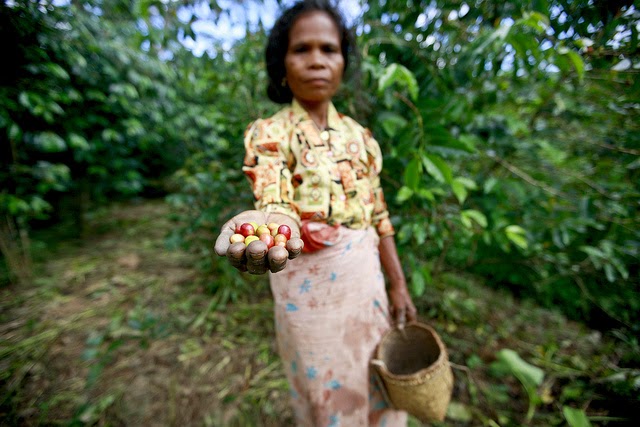
And take this a step further,  if Bosch is right when he says that mission is about transforming reality (and he is right) then the coffee industry has tremendous potential for holistic Kingdom work.  Coffee has a “dark history” (to lift a phrase from Antony Wild) closely tied to slavery, corporate greed and abuse, ecological devastation and worse.  The finest coffees in the world, consumed by the West’s most comfortable suburbanites and grooviest hipsters are nevertheless grown in the poorest regions of the globe by people who are lucky if they make enough money to feed their families. Coffee has not only had a front row seat for some of the greatest injustices in history but the industry as a whole continues to do much to perpetuate the same systemic evils.  

But that’s exactly where things get interesting.  

First of all, coffee shops have always been fertile ground for over-stimulated people to stimulate one another to ideas of innovation, social change, and even revolution (e.g. both the French and American Revolutions were essentially brewed – pun intended – in coffee shops).  I observe today that crowds of caffeinated coffee consumers could still be rallied around coffee production strategies that brought about positive and sustainable transformation. To say nothing of using coffee shops as third-spaces to catalyze all manner of justice causes.

What is more, the business of coffee growing and shipping puts one in close proximity to poverty, disease, violence and the long-term effects of violence, the global gateways of forced migration (trafficking), and other forms of oppression.  Proximity gives way to intentional presence for the Christ-follower, to incarnation and thus to strategic engagement and partnership for the sake of Kingdom transformation.  So, the implications here are deep for how we do business and to what end.  What is clear to me is that the best way to address injustices perpetuated or ignored by the coffee industry is to radically transform the way that business is done. 

So, we close the series today with two quite different concepts - globalization and justice - that will absolutely need to be taken together if we are ever going to end or stop anything.  What does the world look like from your seat?  How are you and your team engaging in global connections and partnerships for the sake of bringing Kingdom justice to bear?  

Well, the coffee shop in which I sitting as I write this is closing.  I need to wrap this up.  I've enjoyed pouring out my heart to you during this series.  Pray for me and for everyone at Trinity and Endiro as we journey with the Lord in this new endeavor.  

Brewing a Better World (Part 3): Business ITSELF as Mission

Photo by United Nations Photos
Today it's the third installment of our series about coffee and Jesus and changing the world. By now you have realized that while I am talking about coffee, I'm not just talking about coffee. [Catch up on the whole series here.] The question on my mind today is this:

How can the business of coffee itself transform reality for the sake of the Kingdom of God?

To be honest, I am still doing a lot of research on this, but it seems to be the case that daily earnings of the average coffee grower is significantly less than the price of a single cup of the muck they're mass-pouring over at Starbucks.  The African "coffee belt" countries in particular have long known more than their fair share of poverty, disease, violence, human trafficking and more.  Coffee giants have too often been guilty of ransacking growing areas paying little attention to local wages, pushing low-quality coffee into the market, harming ecosystems (which not only comes at a price measured in flora and fauna but also in long-term agricultural sustainability and thus the livelihoods of people), etc. 

What if we could develop businesses that created jobs and professional development, wealth and sustainability? What if the business found a way to form strategic partnerships to address local and global injustices?  What if we approached agriculture with a passion to steward God's creation?  What if we created third-spaces globally which encouraged redemptive relationships, church-outside-the-walls style engagement with communities, and which otherwise facilitated local disciple-making?  

These "what if"s are sending my brain into overdrive (the caffeine helps) as I consider not just ways to make money but a way to do so that is itself mission.  Not long ago, I was talking with a very wealthy Filipino business man who loves Jesus and missions.  We were talking about coffee and the whole idea of "business as mission".  He drew a very important distinction for me.  "What we are after, Cody, is not just business that supports missions but an entire model of doing business that is itself mission."  That is, we want to create a business that transforms reality for the sake of the Kingdom of Christ.  The implications are very wide for us in the coffee industry because it means thinking about the current realities of the coffee growers, the executives and mariners associated with coffee shipping, the servers and baristas and other employees, our customers and all the many families and communities that we touch.  What are their current realities?  What does God think about those realities?  What is God's will for them and what would it look like to bring the Kingdom fully to bear upon those realities?  

It is actually very exciting.  

Think about a business in your community - perhaps its your own business or workplace.  Ask those same questions:

1. List all the people that your business touches and consider the families and communities surrounding those people.  What is the current reality for them?

2.  What does God think about those realities?  How has sin and Satan established footholds and strongholds in those contexts?  What is God's will?  

3. What would it look like for the Kingdom to come in the context of those realities?  

4. How can you business become mission - an agent of Kingdom transformation - in the context of those realities?

Thursday

Resource on Human Trafficking Prevention: The FBI

I've just spent a bit of time exploring the FBI's Human Trafficking page.  It is a great resource to educate and begin to become engaged in helping to stop modern-day slavery.  If you've never visited the site, I think you should do so.

Among other things, the FBI offers the following tips for identifying trafficking victims:


That’s where you come in. Please keep your eyes out for the following indicators that suggest the possibility of human trafficking:
  • Individuals who have no contact with friends or family and no access to identification documents, bank accounts, or cash;
  • Workplaces where psychological manipulation and control are used;
  • Homes or apartments with inhumane living conditions;
  • People whose communications and movements are always monitored or who have moved or rotated through multiple locations in a short amount of time;
  • Places where locks and fences are positioned to confine occupants; and
  • Workers who have excessively long and unusual hours, are unpaid or paid very little, are unable take breaks or days off and have unusual work restrictions, and/or have unexplained work injuries or signs of untreated illness or disease.
Bear in mind: human trafficking victims can be found in many job locations and industries—including factories, restaurants, elder care facilities, hotels, housekeeping, child-rearing, agriculture, construction and landscaping, food processing, meat-packing, cleaning services…as well as the commercial sex industry.

Bed Bug Infestation Spreads | NewsFeed | TIME.com

To heck with bald eagles! We want DDT!!!

Bed Bug Infestation Spreads | NewsFeed | TIME.com: "It’s an honor no American metropolis would fight for: The City That Bites You Back. But in any race, there’s a loser as well as a winner, and Philadelphia tops this year’s list of the most bed bug-infested cities in the U.S. Terminix, the world’s largest pest control company, annually ranks major cities based on the number of infestations confirmed by their staff. This year’s rankings have Cincinnati coming in second and New York City — the most-infested city for the past two years — coming in third. Cleveland, Miami, Houston, Indianapolis and New Haven joined the top 15 this year."

Friday

Scam to Rob Refugees Hits Illinois

This morning I heard from a Bhutanese family here locally that received a call from someone pretending to be from some kind of federal grant agency.  They told the family that they were eligible to receive a ten thousand dollar grant but needed to pay a fee of $600 via Western Union to qualify.  The family actually called me from the Western Union office to ask if it was okay to send the money.  Of course, you may remember that I told you about this scam a couple weeks back.  If you have Bhutanese friends, please warn them about this scam and instruct them not to share personal information or send money.  If they receive a call, it should be reported to their refugee resettlement agency, who should then report it to the proper authorities.  Below is my previous post on this topic:

Today I want to pass on the following information. Please see the link below for details on a scam that has been victimizing Bhutanese Refugees in the US and take the time to warn your friends. Additionally, as tax season approaches, 'tis the season for scams against refugees. Unscrupulous "accountants" have been known to take advantage of refugees by offering to get them larger tax returns. This is often done illegally by misreporting information in various ways.

Immigration scam targeting resettled Bhutanese in US | Bhutan News Service: "The Office of Refugee Resettlement (ORR) has notified the US Citizenship and Immigration Services of a telephone scam that appears to target Bhutanese refugees . . . .“A man identifying himself as a representative of the “Federal Grants Department” calls from a Washington, DC-based telephone number, (202) 436-9601, informing recently resettled refugees that they are eligible to receive $10,000 because they are refugees from Bhutan,” ORR reported USCIS. It further said that in order to claim the money, they are instructed to produce a money order for $650, and call the telephone number for further instructions on where to send the money."

I Guess Ethnic Cleansing Doesn't Count as Corruption

Refugee's Depiction of Torture Received in Bhutan
Transparency International has released a report scoring some 183 countries according to what they call a "Corruption Perception Index". In South Asia, their findings show Bhutan as the least corrupt nation in the region. I find such a labeling (i.e. Bhutan as a relatively "clean" nation) to be misleading at best and a disservice to humanity at worse. Those unaware of the Bhutanese government's effort to "cleanse" the nation of ethnic and religious minorities may be tempted to think of Bhutan as a romantic and exotic kingdom - worthy of praise for it ability to preserve a "pure" society. An index like this may have the effect of boosting tourism and thus further prop up and legitimatize the countries criminal regime. It is laughable and sad at the same time. Bhutan has committed crimes against humanity and either forcibly exiled or killed thousands of its residents. What level of "non-corruption" they have managed to obtain has come at the edge of a genocidal sword.

TI ranks Bhutan as least corrupt country in South Asia | Bhutan News Service: "Bhutan has been ranked as the least corrupt country in South Asia. Nepal is the second most corrupt country in South Asia after Afghanistan if one goes by the Corruption Perception Index- 2011 released by Berlin-based Transparency International today."

Thursday

Nepal’s economy dependent on exploitation | MediaGlobal News

God settles the solitary in a home; he leads out the prisoners to prosperity, but the rebellious dwell in a parched land. (Psa 68:6 ESV)

Here's an article that highlights well an angle of human trafficking that you may not be aware of. I'm not sure that I agree with the tone of the headline which seems to blame Nepal for the large number of women who are exploited. The fault, it seems, lies more with the receiving nations that don't do enough to prevent the abuse of domestic workers. Anyway, this is something the Church should be more greatly aware of. It is shocking to me to know that 9 out of 10 women who leave Nepal for foreign work "are victims of exploitation or sexual violence".

Nepal’s economy dependent on exploitation | MediaGlobal News: "Since the 1990s, in light of increased globalization, more and more women are joining the ranks of Nepalese migrant workers. Of the approximately 83,000 Nepalese women that leave the country every year to work for foreign employers, fully 90 percent are victims of exploitation or sexual violence, says a study by the Foreign Nepali Workers Rescue Center (FNWRC).

Saturday

Hunger Strike in Nepali Refugee Camp

To be honest, I'm not exactly sure what to make of this story.  For the past few days, I've been following, with some level of confusion, the development in Nepal's Beldangi 2 camp.  There a young Bhutanese-Nepali woman by the name of Durga Bista has spearheaded a hunger strike with about a dozen other women.  They have vowed to "fast unto death" unless their demands are met and are now a few days into the process.  Their demands?  They appear to be calling upon the Nation of Nepal to grant them "refugee status".

Now, what does that exactly mean?  That's where the confusion comes in.  Bista has said that the group is not asking to become Nepali citizens.  Rather they want to be granted refugee status.  Of course, in the United States, being granted refugee status means that you can legally live and work in the U.S. on a permanent basis and begin a process towards obtaining citizenship.  In Nepal, I assume that this is somewhat different.  However, it seems clear enough that Bista and her companions want to be granted some kind of permanent, legal status -- to live and work in Nepal.  The best I can discern is that this group consists of those who reject 3rd country resettlement for whatever reason.  

Anyway, the former camp secretary of Beldangi 2 lives here in Wheaton (he's one of my Nepali brothers actually) so I'm going to do a bit of inquiry to see if I can get a better handle on what's going on.  Since some of you may be concerned, as I am, about these women, I will report back any insights I am able to glean.  Below is a video of Durga Bista explaining her group's demands.  It is in Nepali and I've already been unsuccessful in trying to translate it -- kati chito boleko!


AMENDMENT:  I've just come across another story.  It has actually just left me more confused however.  I can't figure out whether those fasting represent all the people in the camp or just a small portion of people who aren't fully considered as refugees for some reason.  The numbers don't work in the story.  For example, at one point the article refers to 37,000 people who are living a "miserable life" in the camps.  Later, however, we read that "55,000 refugees from Bhutan continue to dwell" in the camps.  Not sure what's going on with those numbers.  Plus the first paragraph says that they are demanding "refugee status and other facilities as enjoyed by by their fellow refugees" in Beldangi 2.  My question is, what are the special circumstances of these women that cause them to not enjoy the benefits of other refugees?  And, who exactly do they represent?

AMENDMENT 2:  Okay, now another story that does shed a bit of light, but just a bit.  Here we get this rather vague statement, "Some 3,749 Bhutanese refugees in five camps . . . have not received identity cards due to various technical reasons and they have been deprived of the government relief package".  The term "various technical reasons" sounds intentionally non-specific.  What technical reasons?  Incorrectly filled out paperwork?  Not really being from Bhutan?  There is sort of a wide range of possibilities.

Friday

Endiro Coffee in Uganda -- Don't miss it!


Cool. Here's a review of my sister's new coffee shop in Kampala, Uganda. Super proud of her and the work she is doing there. May the Lord show TIBM how we can get behind her in it. By the way, my dear friend Vincent Lee is responsible for the logo design.  So, if you are in Uganda, don't miss Endiro Coffee, and please tell my sister, Gloria, "Namaste" from me.

UPDATE: Got to talk with Gloria on the phone since posting this.  Let her know that the website for Endiro Coffee was down.  It is back up now.  Check it out here http://www.endirocoffee.com/!  Also, please let's all lift up the ministry of Endiro as they seek to launch and support discipleship initiatives among child-headed families in Uganda.

Snapshots #2: Coffee Shop Love | a year in uganda: "Of course I love a good coffee, but I really love Endiro because of the story behind it. My good friend Gloria (in above picture, on right), has had the dream of starting this coffee shop ever since I met her. She’s been a missionary in Nepal and has traveled the world, but her heart now is focused on the vulnerable children of Uganda, and she wanted to open a coffee shop as a means to support some discipleship initiatives she’s developing for child-headed families and other neglected members of society here. Which I think is GREAT. Who doesn’t love buying a latte and feeling like you’ve just done one small thing to save the world?"

Tuesday

The North American Bed Bug Summit

Hey everyone! I just heard that the North American Bed Bug Summit is going on right now here in the Chicago area.  I couldn't be happier to hear that such a thing exists.  Bed bugs are becoming a major problem in the U.S. today and I believe that we need to begin seeing this as an issue of social justice and compassion that the Church -- yes, the Church -- ought to take seriously.  The fact of the matter is that while the bed bugs resurgence likely didn't originate as a problem of the poor and immigrant, it is they who are most vulnerable.  Eradication is extremely expensive and this grows more difficult in older and more communal living spaces such as those often used by the poor, immigrants and refugees.  A middle class person who gets bed bugs can spend hundreds of dollars on an exterminator.  A refugee from Burma or Nepal cannot.
I for one hope that the legalization of DDT and other similar chemicals will be on the table.  I understand that there are environmental concerns with these kind of chemicals, but I am frankly much more concerned with people that I am with plants and animals.  Don't get me wrong.  I love God's creation and feel we have a critical mandate of stewardship of it.  But paramount in this must be our concern for those who are made in God's image.  The Church must muscle past our cringe factor and stand up for the poor on this issue through advocacy, education, and practical help.  In the process, we will undoubtedly get the bugs in our own homes.  That's okay.  It is called solidarity.
I want to point you to a website for more information.  It is Bed Bug Central.  Probably the best place to go for A-Z on bed bugs.